How to Make 2026 Monastic in Five Areas of Your Life

As we stand at the threshold of a new year, many are taking stock of themselves and their lives, and thoughtfully considering what they want the next twelve months to look like.
Monastic life, though lived in a very different setting than secular life, is a tremendous font of inspiration for those aspiring to live virtuously and in ever greater union with God.
And so I sit here to reflect on what we can draw from monasticism for our New Year. I want to look at something from each pillar of our life that we tend to make a resolution for: spiritual, physical, personal, financial, and relationship.
Spiritual
Of course, monastic life offers ample inspiration for the spiritual life, being centered entirely on it! But there are three things I would specifically draw your attention to, for you to consider involving more deeply in your life in the upcoming year...

1) Silence. Silence is one of the most essential elements of the cloister. The more spiritual works I read, the more it is impressed upon me how important silence is for progress towards union with God; and at the same time, I realize how little silence we have these days. Putting away your phone, turning off the tv, opting for no radio in the car, doing chores quietly rather than with a podcast on...all little ways that we can embrace silence and open our hearts to receive the gentle whispers of God's voice.
2) Spiritual reading. Every day in the monastery, there is much spiritual reading done. Through the reading heard in community during meal time, and the private reading done each afternoon, the fire of devotion is rekindled, the soul reinspired, and the spirit fed by spiritual masters. It is incredible what a impact even a little bit of spiritual reading has on the health of the soul, and I cannot encourage you enough to set aside time, even just 15 minutes, to read some spiritual book each day.
3) Divine Office. I wish I could teach everyone about the power and beauty of this prayer! I didn't know about it until I was more seriously discerning religious life, cradle Catholic though I was, and I have been saddened to find this same lack of knowledge in the vast majority of Catholics! The Divine Office is the official prayer of the Church, second only to the Mass itself, and is prayed daily by all priest and religious around the world. To pray it is to be joined to all of them in a cycle of prayer which flows around the world, day after day, hour after hour. The Divine Office is composed of psalms and scripture readings, and while it can seem a bit intimidating at first, it is pretty simple once you pick up on the pattern! My suggestion would be starting with Night Prayer - it is on a one week cycle, which makes it very straightforward, and only takes 10ish minutes to pray! (Note: they are so close to publishing an updated version, so I do not recommend investing in a physical copy right now unless you can find it inexpensively/used!)
Physical
Monastic life is far from being self-indulgent, and for that reason, it is a very healthy way of life! Three things you can incorporate into your routine that are both monastic and positively impact health are:
1) Regular sleep schedule. In the monastery, all lights are promptly out at the set hour each night; and when morning comes, everyone is out of bed at the first call - no snooze button in the cloister! In a world where we have at least weekends to sleep in and relax, it seemed daunting at first to undertake a long-term commitment to rising early and retiring at a decent hour every single day. But it is amazing how well the body thrives on regularity, and how quickly it catches onto the schedule and makes it a natural rhythm. Not to mention the virtue of self-discpline that is practiced, and the sacrifice you get to make on any extra sleepy or chilly mornings where the bed is far more appealing than beginning the day! Making your sleep schedule regular is a simple but powerful monastic and health practice for the new year.
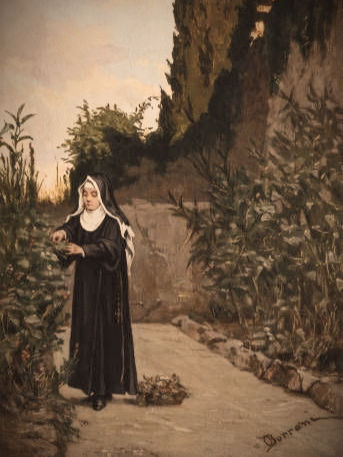
2) Fresh air. We had a large garden at the monastery that we worked in daily (aside from winter of
course); we also took our community recreation outside as the weather permitted. We had a lovely walkway with outdoor Stations of the Cross for one to pray through which I often utilized, and during the personal time after Night Prayer, Sisters often strolled outside in the sweet evening air. Getting outside daily is something that can be hard to fit in, but even a few minutes of being in the outdoors and getting movement and some fresh air is so good for mind, soul, and body alike!
3) Good nutrition. Food isn't intended to be an indulgence, in regard to quantity or flavor. It should be something we partake in with regularity, simplicity, and balance, as is practiced in monastic communities. A simple breakfast, nourishing dinner, and hearty supper, with a light snack between dinner and supper to boost one's energy, allows one to be nourished without excess, and satisfied without indulgence. As you plan meals, strive to make nutritiously balanced dishes; between meals, do not give in to indulgent or excessive snacking.
Personal
Although those in monastic life seem quite stationary, having settled into their vocation, and remaining within the walls of their cloister, the potential for personal growth remains, just as much as it is present for anyone else. So often, we can get caught up in the day-to-day routines of life and not grow beyond where we are at, since there is no pressing need when we're plowing along just fine. Yet we have the duty to develop our personal strengths and talents, making good use of what Jesus the Master has entrusted to us! Some monastic inspired growth ideas are:

1) Take an online course in the Faith. In this modern age of technology, options are endless! One really neat resource I've discovered is the Institute of Catholic Culture, that offers free, live or self-paced courses that even have certificates for completion! Check it out here. Another really incredible resource for free courses is the Thomistic Institute, which you can visit here: Aquinas 101 - Courses.
If a course is too big of an undertaking/commitment, there are so many talks, sermons, and podcasts offered to help us grow in our knowledge of the faith. My favorite podcast, no surprise, is Carmel Cast, offered by the Carmelite Friars through the Institute of Carmelite Studies. They have individual talks, mini series, and full book study series which is amazing! And of course there's a ton of other options out there to suit anyone's interests!
2) Alongside these more scholarly endeavors, developing more practical skills is also very monastic! I got to help with many tasks around the monastery that developed my skill set in new ways; one of the things I helped with that was new to me was the canning which was really fun! There are so many useful skills we could try in the new year that would be of great benefit to us in the long run, whether gardening, sewing, canning, baking bread, making our own greeting cards, becoming more proficient in an instrument...the list goes on! Don't be afraid to stretch yourself, even if it's a bit messy at first.
Financial
You may be surprised that a financial aspect would be included in my monastic list, but I learned much in the monastery about living the holy poverty Jesus lived and taught us! So often we can write off Gospel poverty as being for those vowed to poverty in religious life, but that couldn't be further from the truth. We are all called to have a simplicity in our finances and possessions, and here's some simple ways we can apply monastic principles:

1) Learn to make good use of what you have. In monastic life, much is obtained through charitable
donations rather than purchases. This leads to the need for prudent meal planning, allotment of resources, etc. For us, this could look like learning to use up what's in the pantry before adding more to the shelves, or shopping sales and building meal plans from those sale items; using a different scent of soap because it was on the clearance rack, or finishing a product we don't quite like before trying another brand. (Honestly, this practice makes one begin to see God's providential care in little ways we would miss if we weren't striving for more simplicity and frugality in our use of our resources!)
2) More carefully discerning need versus want. In monastic poverty, there is little room for wants; needs are met, but, in complete poverty of spirit, one rarely pursues personal wants when it comes to material things. In a day where ads are constantly presenting this or that item to us and trying to convince us of all the reasons we *need * it, when it is most certainly a want and not a need, it takes very deliberate effort to not allow that line to be blurred. It is certainly not wrong to purchase through want rather than need sometimes, but learning to slow the shopping is so important in our constant battle against materialism and attachment to this world.
3) Avoiding waste. In the monastic budget, there is little room for wastefulness. In our homes, we can seek to avoid the little acts of negligence that incur wastefulness - whether leaving a light or the water on unnecessarily, forgetting a window or door is open when air conditioning or heating is running, changing an outfit that isn't actually dirty simply because we wore it yesterday, using disposable when we could select reusable, etc. There are many little ways that we can cut back on wastefulness! These little acts of awareness help us to live less selfishly, more gratefully, and can be an act of mortification as we choose frugality over convenience.
Relationship
Last but not least, relationships. Yes, those recluses from society, that spend most of their days in silence within the monastery walls have much to teach us in regard to relationships!
1) Set aside intentional community time within the home. Twice a day in Carmel, all the Sisters gathered for "recreation." We each brought a little task to occupy our hands, whether a small sewing project, a cord rosary in progress, scapular sewing, etc., and enjoyed pleasant conversation. Setting aside time to connect intentionally as a family is a simple way to bring this monastic practice into the home. Whether over supper, or for a period before bedtime, having time where all else is set aside for the enjoyment of eachother's company is so important for building relationships and fostering a community spirit!

2) Snail mail! Every month, we would receive our letters from family and friends, and write a letter home. This slow-paced form of contact was so much better than the constant little updates on everyone we are flooded with through social media, where we connect without having any actual connection. And so I cannot encourage you enough to make this year a writing year. Even if you choose one friend to be penpals with and do monthly letters - write. You will find that there is a new and greater depth in the relationship, for letters naturally lend themselves to deeper intimacy than text messages and instagram stories; you will also enjoy the quiet contemplative nature of the time spent writing letters.
Well, I hope this article was helpful for you...it turned out to be far longer than I anticipated, but there is just so much to learn from monastic life!
Praying that your 2026 is a very monastic year :)
Cecilia


I love the Divine Liturgy app. It's so nice to be able to pull up the app during the day if I get some time to say an additional prayer/s during the day. I do morning and night daily but if I'm slow at work I will do a mid mornning or afternoon prayer. It also has audio to follow along with.
Thank you. I am a Discalced Secular Carmelite
I get a bit off task during the weeks between my community meeting. I believe this will get me back on track. Thanks again.
Loved this so much! I'm definetely going to try it! My "wants" are often mistakenly taken as "needs"... I have to improve at this!
Very useful, and filled with good ideas! I will put them in practice.